To Do List Your Mom: A Designer's Review for Embroidery
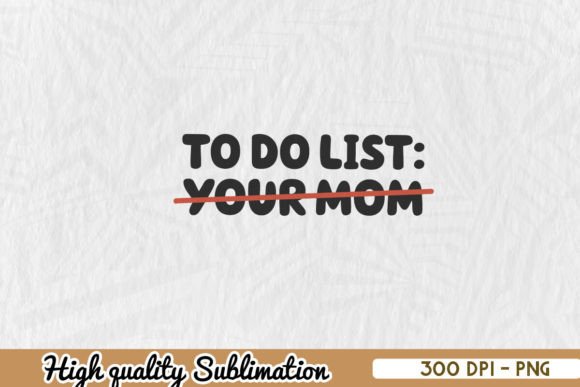
As a designer who spends more time staring at stitch maps than most people care to admit, I approach every new machine embroidery design with a mix of excitement and skepticism. When I first encountered the To Do List Your Mom Funny Sublimation graphic, my initial reaction was purely visual. It sits squarely in the Crafts and Graphics category, promising an easy route to creating printable iron-on transfers, framing art, or party decor. However, my brain immediately started translating those high-resolution pixels into thread paths. The question wasn't just "Is this funny?" but rather, "How does this translate from a digital file to a tangible, stitched finished product?"
The mood of this design is undeniably playful and slightly sassy. It taps into that universal humor regarding maternal authority and household management. Visually, the layout suggests a checklist format, which is excellent for embroidery because it offers natural breaks for different stitch types. The theme is versatile enough to move beyond a simple joke on a t-shirt; it has the potential to become a staple design asset for boutique branding or seasonal gift lines. For an Etsy seller or small shop owner, the key is determining if the visual personality holds up when rendered in thread, where details can easily get lost.
Translating Digital Graphics to Stitched Reality
Let's talk about a real-world scenario. Imagine you are preparing a custom order for a client who wants a humorous yet functional item for their kitchen or laundry room. You decide to use the concept behind To Do List Your Mom Funny Sublimation to create a personalized apron or a set of tea towels. In its original form as a sublimation graphic, the lines are crisp, and the text is sharp. But when you convert this into an embroidery file, the rules change.
The success of this project hinges on how you handle the typography. If the original graphic features tiny, intricate lettering for the "list" items, those will be the first casualty in an embroidery project. Small text often requires a dense satin stitch or a very tight fill stitch, which can cause puckering on lighter fabrics like cotton tea towels. As a reviewer, I would advise digitizing this with a slightly bolder font weight than the original graphic to ensure readability after washing. The "check boxes" next to each item are a fantastic opportunity to use a contrasting thread color or even a small applique design element if you want to add texture.
For a sweatshirt embroidery project, the stakes are slightly lower regarding fabric stability, but the stitch density becomes crucial. A heavy build-up of thread on a fleece hoodie can make the design feel stiff and uncomfortable against the skin. If you are adapting this graphic for apparel, consider using a lighter fill pattern or incorporating running stitch outlines to keep the hand of the fabric soft. The goal is to maintain the humor without turning the garment into a cardboard shield.
Ideal Applications for Small Business and Gifts
This design shines brightest when applied to items that benefit from a flat, stable surface. A tote bag design is perhaps the strongest contender here. Canvas or heavy cotton tote bags provide the perfect canvas for the checklist aesthetic. You can envision a "Mom's Survival Kit" tote where the embroidered list includes actual survival items. This transforms a simple graphic into a functional handmade product that customers love.
Furthermore, this concept works exceptionally well for holiday embroidery or Mother's Day collections. Imagine a series of personalized gift items where the "To Do List" is customized for specific family members. For a craft business, this offers scalability. You can create one master digitization and offer variations in thread colors to match different brand palettes. It also serves as an excellent printable mockup for digital product sellers who want to show what the physical version could look like, bridging the gap between digital Graphics and physical goods.
However, caution is required when considering curved surfaces. While a cap might seem like a fun place for a quick joke, the limited hoop size and the curvature of the front panel can distort the linear nature of a list. Unless the design is significantly simplified, I would avoid using this on hats. Similarly, stretchy fabrics like thin jersey knits require a robust stabilizer strategy. Without proper backing, the horizontal lines of a list can warp, making the joke unreadable.
Technical Considerations for Professional Results
Before committing to a production run, there are several technical factors to evaluate. First, always test the design on scrap fabric that matches your final material. This is non-negotiable. You need to see how the fabric texture interacts with the stitch count. Dark fabrics present another challenge; if the original To Do List Your Mom Funny Sublimation relies on black text on a white background, stitching black thread on a black garment won't work. You must plan for high-contrast thread colors or consider a light-colored underlay to make the design pop.
Another critical aspect is licensing. Since the source material is described as a sublimation graphic intended for printing and crafting, you must verify the terms before selling finished embroidered items or digitized versions. Many digital assets in the Crafts sector have restrictions on commercial embroidery use. Ensure you have the right to modify and sell the stitched finished product. If the license only covers personal use or print-on-demand, attempting to sell embroidered goods could lead to legal issues for your small shop product line.
When digitizing, pay close attention to the corners of the checkboxes and the ends of the lines. These are common failure points where threads can loop or break. A good digitizer will add tack-down stitches or adjust the angle of entry to ensure clean corners. Also, consider the washability. Items like aprons and tea towels undergo frequent laundering. A design with low stitch density might fray over time, while one that is too dense might crack. Finding that balance is what separates a hobbyist attempt from a professional commercial embroidery piece.
Final Verdict on Visual Appeal and Value
Ultimately, the value of To Do List Your Mom Funny Sublimation in an embroidery context lies in its adaptability. It has the potential to enhance customer trust and brand consistency if executed with care. A well-stitched version of this design signals to the buyer that thought went into the creation, elevating it from a novelty item to a cherished custom apparel piece or home decor item.
For the creative entrepreneur, this design represents an opportunity to showcase skill. It challenges you to solve problems related to text legibility, color contrast, and fabric compatibility. Whether you are making a single embroidered patch for a friend or a hundred units for a boutique launch, the principles remain the same. Respect the source material, but do not be afraid to adapt it for the medium of thread. With the right stabilizer, appropriate hoop size, and a keen eye for detail, this funny concept can become a serious revenue driver for your business.
In conclusion, while the original file is marketed for sublimation and printing, its core visual strength translates well to embroidery with the right adjustments. It invites interaction, sparks conversation, and fits perfectly into the current market demand for personalized, humorous home goods. Just remember to check those license terms, test your stitches, and let the quality of your work speak louder than the joke itself.